Friday, 28 February 2014

Florida part 3: North Everglades National Park

After spending some time in the south of the park it was now time for the northern part. Everglades feels like a must while visiting Florida, so despite the heat I didn't wear shorts but long sleeves and long pants.
From Miami and straight to the west is the Tamiami Trail. It's the most southern road between the west and east coasts, at least when driving a rental :-) and it cuts straight through the Everglades. On the south side of the road is the park and on the north side the rest of the glades. Half way throu i cuts through the south part of Big Cypress National Preserve. The goal for this day was to make a stop at both this parks.

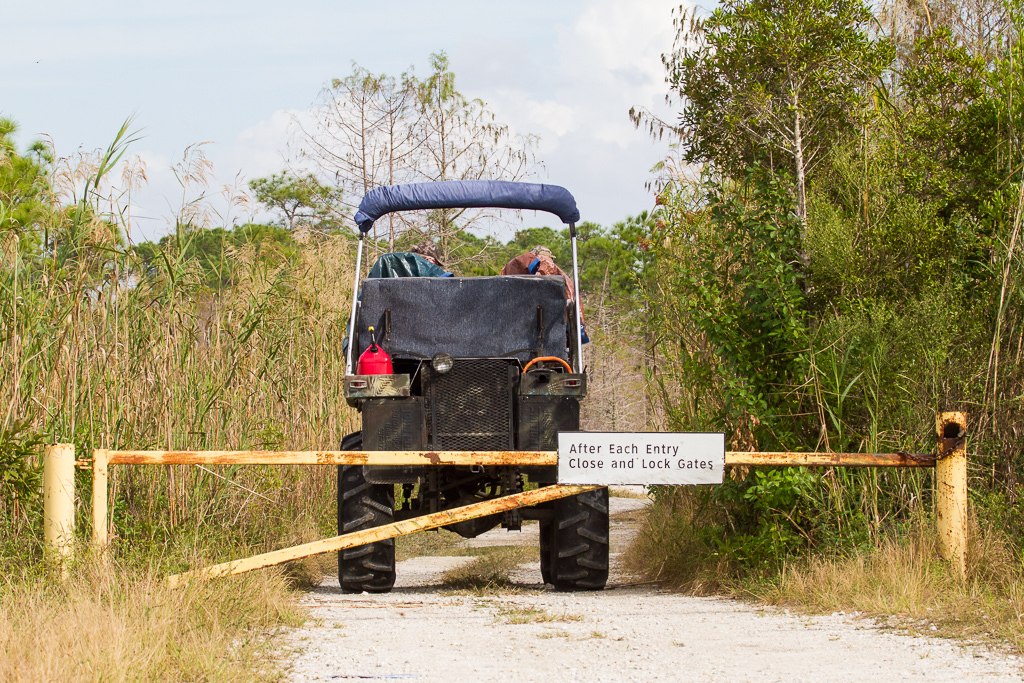
First stop was Shark Valley and no, there are no sharks here :-) But there is a pawed road that stretches in to the park. It's about 25 km and is open for visitors on foot or by bike and trams / buses is regularly taking visitors out for a tour. To keep a safe traffic environment on the one way road, the trams goes in one direction and bikes in the opposite direction.Very clear instructions are given that stop and get off the bike when a vehicle is approaching. We decided to rent some bikes just to have the possibility to stop when we liked and to get a closer and more natural experience.


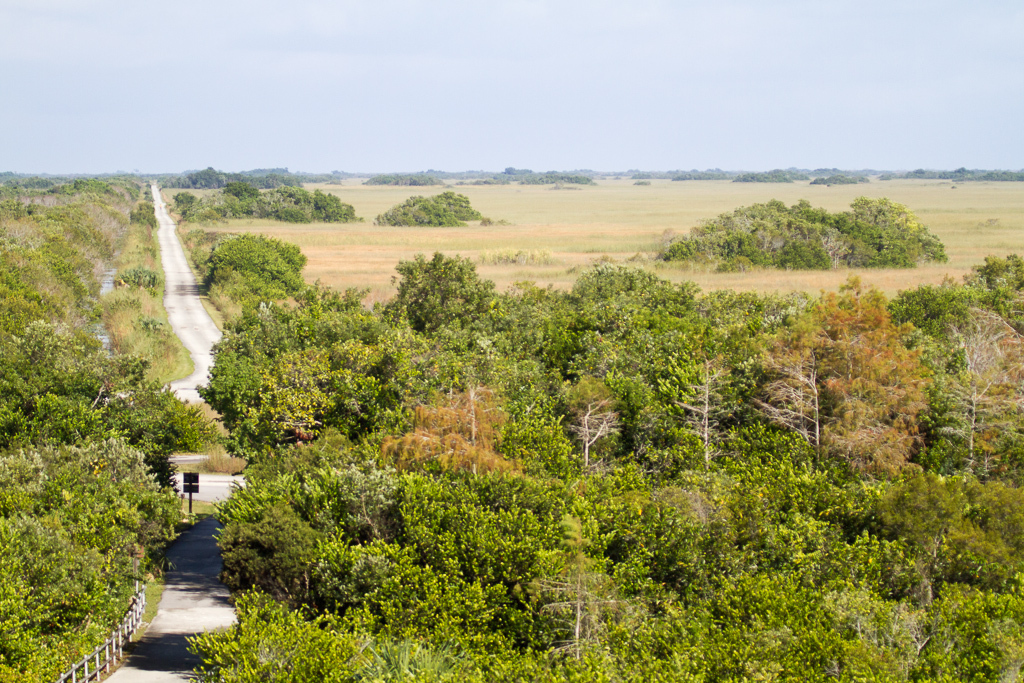
Just about in the middle of the loop road stands a tower. It's open for visitors to walk up and enjoy the grand view. The road to the tower is straight as a nail and this day the wind is quite heavy and of course we are pedalling in to the wind. But since it's a well visited place we pushed on.


Already after a couple of hundred meters we had the first sightings of alligators. The were laying on the road and I think they were trying to get warm in the sun. Safety instructions states that one shouldn't go closer than 5 meters, but the road wasn't that wide so we just slowly passed by, hoping for the best. Alligators is said not to see humans as food, well as long as we were standing up anyway.


Exited of this encounter we looked forward for the next meeting. But as the wheels kept turning we started to realise that we didn't adjust the bikes as much as we should have done and upon that the fully loaded camera backpack started to get heavier. Let's just say it was a real good work out both for body and mind :-)
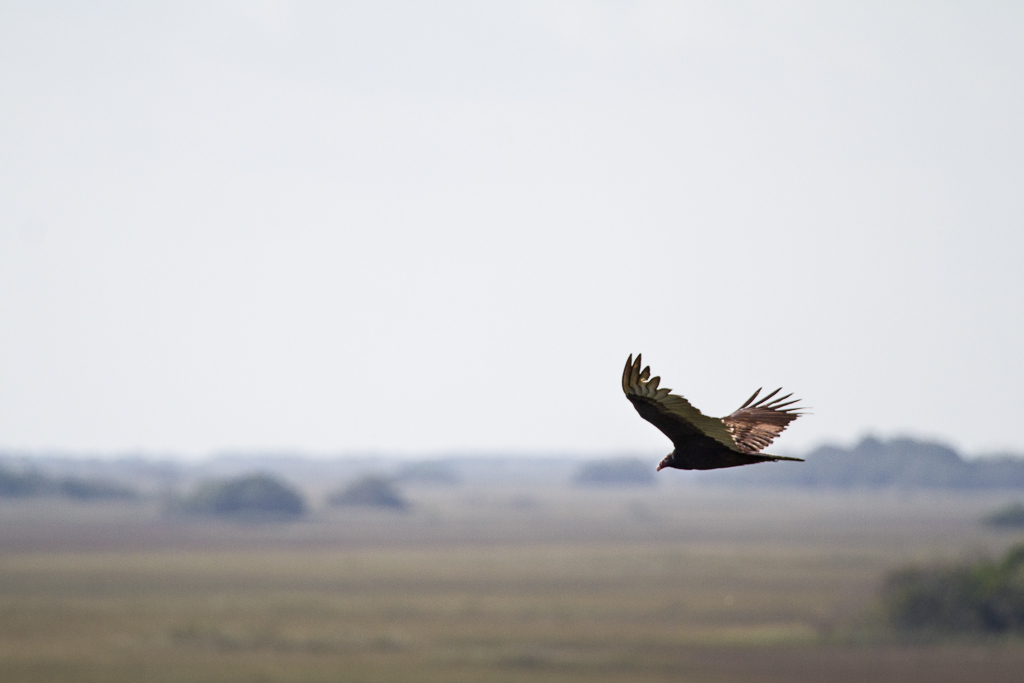
At the turning point beside the tower is a restroom, but there is no water that is drinkable. Luckily we had brought about 3 liters of water along, which in normal cases would last this kind of trip. When arriving to the tower we were down to just one liter left. The constant opposite wind and the blazing sun had taken it's toll. Is this the end? Were we to be alligator food out in nowhere? Isn't that a hungry vulture up there just wainting for us to fall down? Well it wasn't quite that drastic but we hadn't seen any other people and no wildlife either (except that vulture then) so morale was slowly getting lower.


After a nice break at the tower we started back towards the starting point and now the road had more curves and small ponds on the sides so it should be more interesting we thought. Travelling with the wind in ones back was really a morale boost. The landscape was swooshing by with an alligator here and there out in the wet grass.


A keen look out was the only way to spot these animals, because they were not easy to see. But it would take all the way to the end before wildlife were up in numbers and close to the road.


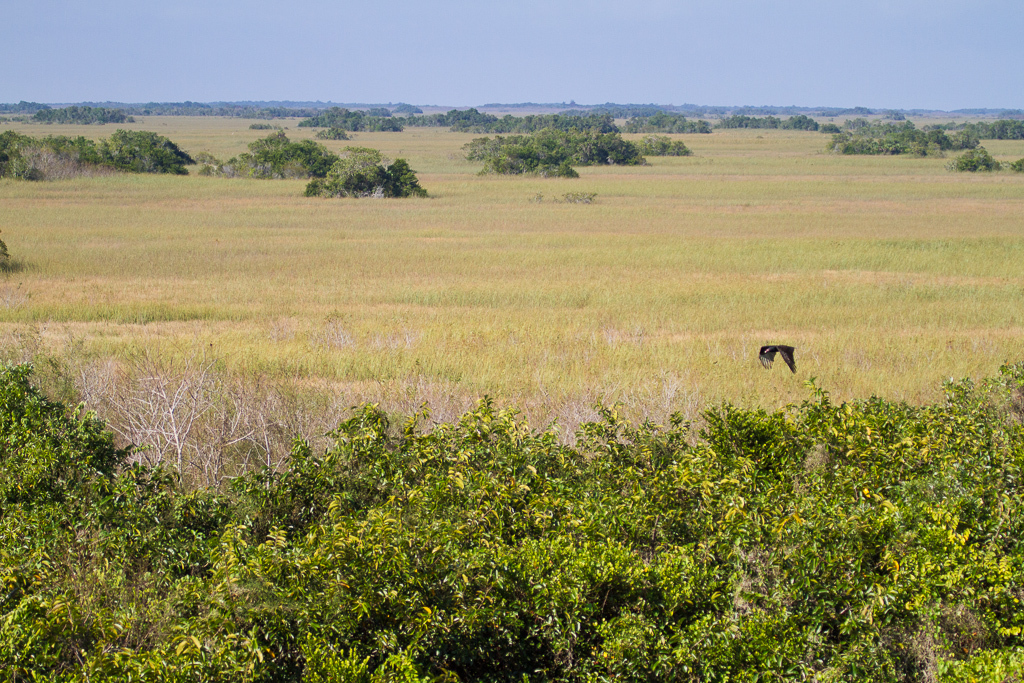
So sum up some experience of Shark Valley: I'd say it's quite enough to take a stroll around the visitors centre to save both time and money. Or we just had a bad luck due to the weather. To much water on the prairie which meant that the animals were spread out and out of sight.

Tuesday, 25 February 2014

Florida part 2: South Everglades Nat. Park

The south part of Florida is a really big wetland. Hollywood films and pictures had created an image of this part as a deep, dark and moist marshland with alligators, snakes and funny looking animals everywhere and it would require a boat to make any kind of transportation.
As I started to do more research before going there I realized that it was nothing like that. But still when I got there I was still amazed of how it big and open this area is. Everglades is a very wide area and its main part is the slowly moving water over the grassy prairie. Big open flat areas with the main part consisting of grass and with small islands called hammocks with brushes and trees. But again if you leave the tourist areas you will probably find more dense jungle like areas. That is still to find out someday :-)

En ensam gam cirklar över våtmarken

Anyway, my first goal on this trip i along the road from the eastern entrance from Florida City down to  Flamingo. According to my research on the web, this is the area where there is loads of wading birds gathering during the winter months especially in a small pond far down to the south that is called Eco pond. It was quite a bit to travel from the motel in Homestead and I wanted to get at least a glimpse of the morning light so an early start was on the schedule. There is the possibility to camp out down at flamingo but that was not a real option during this trip. So it was up real early and drive straight down the approximately 80 km to Eco pond. Once there it was plenty of parking space and the pond was only about 50 meters from the road.
Eco Pond

I was really hopeful of what I was going to see there, but it was a real disappointment. Just a handful of birds was at this location and activity was down to almost zero, deserted almost. Well the ospreys where there, as they are everywhere in Florida.
Precis som en skarv höll Fiskgjusen ut sina vingar för att torka.
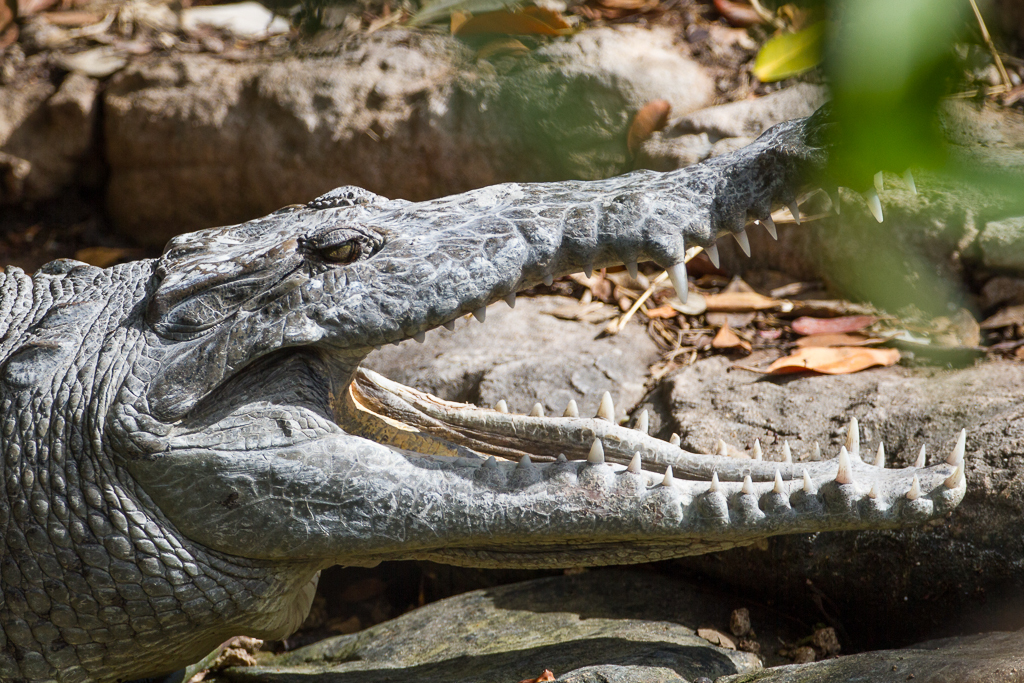
Someone said that during some tropical storm there had been a lot of salt-water flushed in to the pond and thereby shifting the the balance. Someone else said that it had been raining a lot during fall and that the birds had not arrived yet. Still disappointed I went to the visitors centre and they gave me a tip where to see an American crocodile. So I went there, but the area was restricted for visitors but I got a glimpse of this, as I understand it, endangered species.

American Crocidile. Svårfångad mellan lövverken.
On the drive back towards the entrance area I had only one eye on the road. The other one was constantly checking out ditches and water-areas, but with a poor result. This day it was really warm up to about 32 degrees Celsius, which is quit warm for a northern European like my self :-) The humid air did its best to drain my body from any kind of powers as soon as I left the cosy air-conditioned car.
Before leaving I stopped at Anhinga trail that is in close proximity to the eastern entrance. Anhinga is by the way the name of a bird that looks like an cormorant but with a pointy beak. Along this trail it was much more activity and several photo opportunities than down at Eco Pond. Unfortunately it was now mid day and the light was hard.
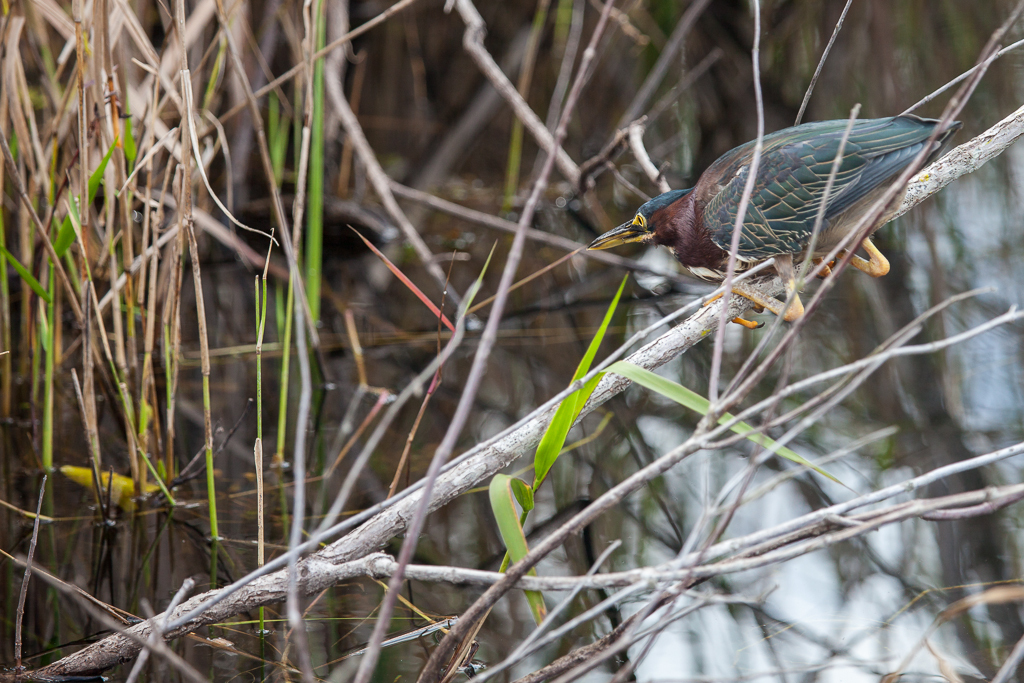
Green Heron / Grönryggad Häger spanar ner över vattenytan.
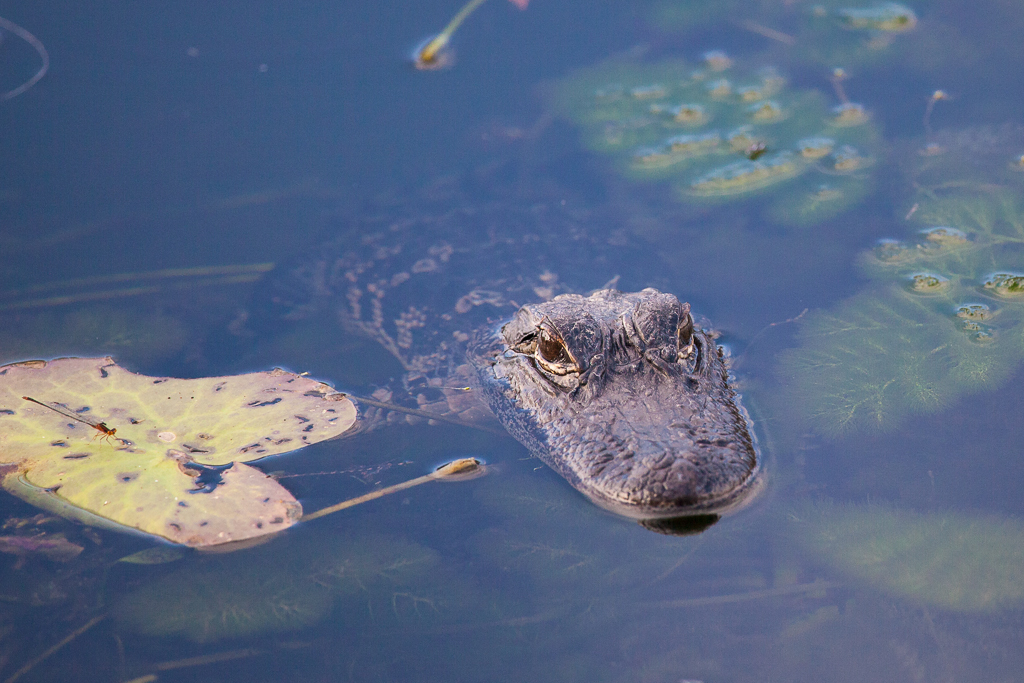
The Anhinga trail is mainly a board-walk out in the wet area which makes it easy to see wildlife but difficult to get down to eye level. Well that was ok since there where several alligators lurking in the water even if this particular one was a tiny one :-)
Liten alligator
So to round up this area:
South Everglades in December can be a bit early in the bird season at least to photograph birds in big amounts. Eco pond has gently sloping sides which makes it easy to get down to the water level an dat least a 300 mm lens is needed.
Anhinga trail should be the first stop mad the use of a 300mm lens is no problem even considering the rails of the board walk. I had a 500 mm and it was sometimes a little to much to handle around other people as the board-walk could sometimes be a little crowded. A bean bag or a small tripod is quite enough here.
Tur det inte var rusningstid på gångbanan.
 If you want more information about national parks in the USA there a plenty of good information at their website. here is more about Everglades: http://www.nps.gov/ever/index.htm

Sunday, 23 February 2014

Florida in winter part 1.


In a series of blog posts  I will share my experience of photographing in Florida.
Going to Florida during the winter is a good possibility to combine hanging out in the sun and swimming  with photography. The winter is also the dry season which means less of mosquitoes and more of birds and alligators. During the winter months birds from all of North-America come to Florida to make more birds. But above all it´s much warmer climate than in Sweden during the same period :-)


Unlike Sweden the USA does not have the right for each and every one to make visits out in to the wild. Instead one are reduced to use public parks, well unless you are the land owner of course :-). That in other hand means that the parks are mostly adapted to make it easy for the visitor to se the wild nature. There are often plenty of room for parking, wide pathways, toilets and a range of park rangers or other present people that can answer questions and so on. But even in these parks there are regulations (as in most other parks), fees and certain opening hours. Some parks do let photographers in earlier than the rest of the visiting people and some let you go outside the pathways, however there is often a need for a special permit to do that. In some parks there are even some possibilities to drive outside the park roads, but it can require a special car to do that.


In the most visited parks the wildlife is quite use to people so it is relatively easy to get close. Outside parks and in less visited areas the wildlife can be more restrictive to let people get close much the same way it is in Sweden. As soon as you get out of the car they tend to leap away.
The disadvantage of photographing animals in parks is that it can be difficult to get their level, that is eye level. The pathways are often built higher up than ground level and the Florida terrain is rather messy with branches and twigs everywhere which makes it hard to find a soft clean background.

Since it is rather warm the air tends to move up even early in the day and that makes it difficult to use telephoto lenses without getting a unsharp image, at least when the subject is in a little distance. So best time is early morning or late afternoon, which is also the best time for a nice soft light.
Unfortunately it is short period of daylight in december. Light does not get ok until around seven am and it gets dark already at 6 pm, a little depending on other weather conditions of course.